Ginkgo Biloba Watercolor: A Versatile Design Resource for Creative Projects
When planning a creative project, the choice of visual assets can determine both the efficiency of your workflow and the quality of the final result. For designers, crafters, and small business owners, Ginkgo Biloba Watercolor represents a specific category of digital resource that combines botanical elegance with practical usability. This article evaluates what this collection offers, where it excels, and when you might consider alternative options, so you can determine whether it aligns with your specific project goals.
What Is Ginkgo Biloba Watercolor?
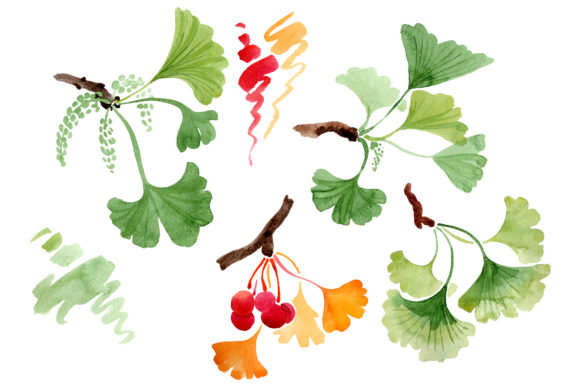
Ginkgo Biloba Watercolor refers to a digital pack of seven hand-painted botanical illustrations centered on the distinctive fan-shaped leaves of the ginkgo tree. Each file in the collection serves a different functional purpose: you receive individual PNG files of isolated leaves and botanical elements, plus JPG files for patterns and frames. All illustrations are rendered at 300 dpi, with the PNG graphics featuring transparent backgrounds for maximum flexibility. The pattern and frame files are delivered as JPGs at 3500x3500 pixels, providing ample resolution for both digital and print applications.
What distinguishes this resource from generic leaf clipart is the hand-painted watercolor technique. Each element carries the subtle variations in pigment saturation, edge softness, and paper texture that characterize genuine aquarelle art. The pack includes frames, borders, patterns, and isolated elements, giving you multiple compositional starting points within a single cohesive visual style.
Why This Resource Attracts Attention from Designers and Creators
Several practical factors explain why someone researching Ginkgo Biloba Watercolor might find it worth consideration. First, the transparent PNG format eliminates the need for manual background removal, which can save substantial time when compositing elements into existing layouts. Second, the 300 dpi resolution supports professional-grade printing without pixelation, making it suitable for physical products like wedding invitations or greeting cards.
The hand-painted quality also offers a distinct aesthetic advantage. Digital vector graphics, while clean and scalable, can sometimes appear sterile. Watercolor textures introduce organic variation that photographs well and reads as artisanal, which is particularly valuable for brands or projects that emphasize natural, handmade, or botanical themes. The inclusion of multiple formats—frames, borders, patterns, and isolated elements—means you can establish visual consistency across different components of a single project without sourcing from multiple vendors.
Strengths of This Collection
The Ginkgo Biloba Watercolor pack offers several concrete advantages. The transparent background on the PNG files gives you full control over placement and layering. You can resize elements, change colors, and combine them with other graphics or typography without fighting awkward white boxes or halos. The 300 dpi resolution meets standard print production requirements, so you can confidently use the files for physical products such as art prints, posters, or stationery.
Another benefit is the coherent visual language across all seven files. When you use multiple elements from the same pack, the consistent watercolor treatment and botanical subject matter create a unified look. This reduces the risk of visual dissonance that can occur when mixing assets from different sources with varying artistic styles or color palettes.
The hand-painted nature of the illustrations also means you get subtle imperfections—variations in opacity, slight color gradients, gentle edge bleeding—that add depth and authenticity. For projects where a digital or vector aesthetic feels too clinical, this organic quality can be a significant differentiator.
Limitations and Considerations
No single resource meets every need, and understanding the tradeoffs of Ginkgo Biloba Watercolor helps you evaluate it fairly. The pattern and frame files are provided as JPGs rather than PNGs. While JPG offers good compression and wide compatibility, it does not support transparency. This means that if you want to overlay a pattern onto an existing colored background, you will need to composite it manually in your editing software.
Additionally, because the files are raster images (pixels) rather than vectors, scaling them beyond their original dimensions can lead to quality loss. At 3500x3500 pixels for the JPGs and 300 dpi for the PNGs, you have substantial resolution for most projects. However, if you need to enlarge an element significantly—for example, turning a small leaf illustration into a large poster background—you might encounter pixelation. Vector alternatives would offer infinite scalability, but they lack the watercolor texture.
Another consideration is specificity of subject. This pack focuses exclusively on ginkgo biloba leaves and botanical motifs. If your project requires a broader range of flora, multiple plant species, or non-botanical decorative elements, this collection alone may not suffice. You would either need to supplement it with additional resources or choose a more diverse set.
Ideal Applications: Where This Resource Excels
Ginkgo Biloba Watercolor is a particularly strong fit for projects that benefit from botanical elegance and a handcrafted aesthetic. Wedding invitations are a common use case because the ginkgo leaf carries symbolic associations with longevity and resilience, and the watercolor treatment aligns with current trends in romantic, natural stationery. The included frames and borders allow you to frame text or photos without designing from scratch, while the isolated elements can accent envelopes, save-the-date cards, or program details.
Greeting cards and gift tags also represent natural applications. The small-format nature of cards means the 300 dpi resolution is more than adequate, and the transparent PNGs let you layer leaves over backgrounds or alongside calligraphy. For bloggers and content creators, the patterns and borders can serve as blog post headers, social media graphics, or printable quote cards. The botanical theme works well for wellness, nature, mindfulness, or lifestyle content.
DIY and craft projects—such as scrapbooking, bullet journaling, or handmade gift wrapping—benefit from the ready-to-use nature of the files. Because each image is a separate file, you can print individual elements and cut them out, or incorporate them into digital layouts before printing. The ability to edit colors and sizes gives you creative freedom while preserving the hand-painted texture that distinguishes the work.
When Alternatives May Be Worth Considering
For certain use cases, other resource types may serve you better. If your project requires scalable graphics for large-format printing—such as banners, signage, or trade show displays—vector-based illustrations (SVG, AI, EPS formats) would offer greater flexibility. Vector files remain crisp at any size, whereas raster watercolor files have a fixed resolution ceiling.
Similarly, if you need exact color matching for corporate branding or a specific Pantone palette, you should evaluate how well the watercolor hues align with your requirements. Hand-painted elements inherently vary in color and opacity, which is part of their charm. However, if you need precise, uniform color reproduction across multiple pieces, a digitally created vector or precisely scanned alternative might be more predictable.
If your project calls for a broader botanical vocabulary—multiple leaf shapes, flowers, branches, or mixed foliage—then a single-species collection like this one may feel limiting. In that case, a larger botanical bundle or a customizable icon set could offer more versatility. Lastly, if your workflow relies heavily on editable layers and native file formats (such as PSD for Photoshop or AI for Illustrator), confirm that the PNG and JPG format of this pack integrates smoothly with your software. Most modern editing programs accept these formats without issue, but native files with pre-separated layers can sometimes accelerate complex compositing.
Practical Decision-Making Insights
To determine whether Ginkgo Biloba Watercolor aligns with your goals, start by identifying the primary output format of your project. If you are designing for print at standard sizes—invitations, cards, prints, posters up to roughly A3 or tabloid size—the 300 dpi resolution and 3500x3500 pixel dimensions are well within professional parameters. For digital use such as social media graphics, blog images, or web design, the resolution is more than sufficient, and the transparent PNGs will simplify your workflow.
Next, consider the visual style you need. If your brand or project emphasizes organic, handcrafted, or botanical aesthetics, the watercolor treatment offers an authentic look that is difficult to achieve with standard digital clipart. If you need clean, precise, or highly uniform visuals, a vector or digitally rendered alternative may be a better match.
Finally, evaluate your tolerance for compositing work. The isolated PNG elements give you strong flexibility, but the JPG patterns and frames require some background handling if you want to overlay them. If you are comfortable with basic layer masking or clipping in your editing software, this is a minor step. If you prefer assets that are fully transparent and ready to drop into any layout, you may want to confirm that the JPG files meet your needs or seek an alternative pack with all elements in transparent format.
Ultimately, Ginkgo Biloba Watercolor serves as a focused, high-quality resource for those who value botanical authenticity and hand-painted texture. Its strengths lie in print-ready resolution, transparent elements, and cohesive visual language. By matching these attributes against your project requirements—especially scale, format compatibility, and aesthetic direction—you can decide with confidence whether this collection supports your creative goals or whether a different resource might serve you better.