Branch of Pink Orchids Watercolor: A Versatile Design Resource for Creative Projects
When assembling a toolkit for digital or print design, the quality and flexibility of individual assets often determine the final result. A single high-resolution watercolor illustration can transform a plain layout into something that feels handcrafted and intentional. For those working on wedding invitations, greeting cards, posters, blogs, or DIY home decor, the Branch of Pink Orchids Watercolor offers a distinct blend of realism and artistry. This article examines what makes this particular set of watercolor elements stand out, explores how it compares with other design resources, and helps you evaluate whether it suits your specific project needs.
Understanding the Branch of Pink Orchids Watercolor
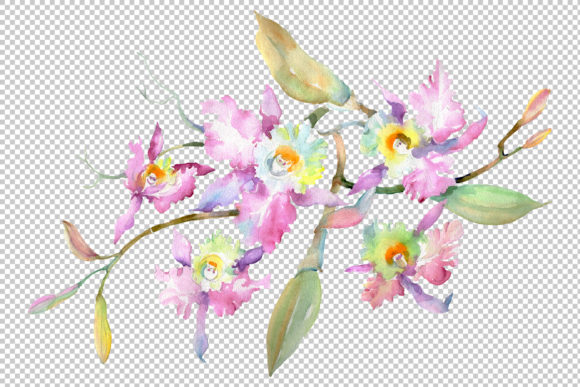
At its core, this resource is a hand-painted watercolor illustration of a pink orchid branch, delivered as a PNG file with a transparent background at 300 dpi. The set includes one PNG file, along with patterns and frames provided as JPG files at 3500x3500 pixels. All illustrations are described as highly detailed, with aquarelle elements suitable for backgrounds, textures, patterns, frames, or borders. Because each image is a separate file, you can combine, resize, and recolor the elements without losing quality.
What distinguishes this product from a simple stock photo is the hand-painted origin. Watercolor art has a natural variation in opacity, edge softness, and color blending that is difficult to replicate with digital filters. The pink orchid branch, in particular, benefits from this medium. The petals take on a delicate translucency, and the stem shows organic shifts in green and brown. This tactile quality is something many designers seek but find hard to achieve on their own.
Key attributes at a glance
- Format: PNG (transparent background), JPG for patterns and frames
- Resolution: 300 dpi, 3500x3500 pixels for patterns and frames
- Contents: 1 PNG file of the orchid branch, plus patterns and frames in JPG
- Style: Hand-painted watercolor, highly detailed, aquarelle
- Use cases: DIY projects, wedding invitations, greeting cards, quotes, blogs, posters, backgrounds, textures, borders
How It Compares to Other Design Resources
Choosing between a watercolor element and other types of graphics depends on the aesthetic you want to achieve, the time you have, and the technical requirements of your project. Below are several comparison points to help you decide.
Watercolor vs. flat vector illustrations
Flat vectors are clean, scalable, and easy to edit. They work well for modern, minimalist branding or when you need to resize an element repeatedly without any degradation. However, vectors lack the organic softness and texture of a real watercolor wash. The Branch of Pink Orchids Watercolor offers a more organic and artistic feel, with subtle gradients and edge irregularities that mimic real paint on paper. If your project calls for warmth, romance, or a handcrafted look—such as a wedding invitation or a nature-themed blog header—watercolor is a stronger choice. If you are designing a crisp infographic or a corporate presentation, vectors may be more appropriate.
Single PNG file vs. multi-element kits
This product includes one PNG illustration plus patterns and frames. Some design kits contain dozens of individual leaves, flowers, and stems that you can arrange yourself. A single branched illustration saves you time if you need a ready-to-use focal element, but it offers less compositional flexibility than a modular set. If you plan to build complex arrangements or need multiple orchid stems at different angles, you may need to purchase additional files or combine this one with other resources. On the other hand, having a single, well-composed branch simplifies placement and reduces the risk of awkward spacing or mismatched proportions.
300 dpi transparent PNG vs. lower-resolution web graphics
Many free or low-cost design assets are 72 dpi and include a solid white background. The Branch of Pink Orchids Watercolor is 300 dpi with a transparent background, which is essential for professional printing. Wedding invitations, greeting cards, and posters are typically printed at 300 dpi to maintain sharpness. The transparent background also allows you to layer the orchid over any color or texture without cutting out a background manually. For web use, 300 dpi is more than needed, but you can easily downsample the file for digital projects without quality loss.
Hand-painted origin vs. digitally generated watercolor effects
Not all watercolor graphics are created equal. Some are made with digital brushes that simulate watercolor but lack the subtle irregularities of real paint. Hand-painted watercolor, like the kind used in this set, carries natural variations in pigment concentration, water pooling, and brush stroke direction. These nuances add depth and authenticity. If your audience values craftsmanship or if you are creating a product that emphasizes handmade quality, a real watercolor element will support that message more effectively than a digital imitation.
Wedding and event stationery
Pink orchids carry associations with elegance, love, and exotic beauty. The watercolor style softens the flower’s form, making it suitable for romantic or vintage-themed events. You can use the branch as a central motif on a save-the-date card, place it along the border of a ceremony program, or scale it up for a full-page background on a welcome sign. Because the file is transparent, you can place it over cream paper textures, pastel backgrounds, or even metallic foil effects in your design software. The included patterns and frames can serve as decorative borders for RSVP cards or directions cards, maintaining a unified visual language across all stationery pieces.
Greeting cards and personal correspondence
For birthday cards, thank-you notes, or sympathy cards, a single orchid branch conveys a thoughtful and personal touch. The watercolor finish diffuses the intensity of the pink, making it appropriate for a wide range of sentiments. You can combine the branch with hand-lettered quotes or calligraphy. Because the file is high resolution, you can print it at home, at a local print shop, or use it with an online card printing service without worrying about pixelation.
Blog headers, social media graphics, and posters
Bloggers and content creators often need visuals that are distinctive but not overly busy. The Branch of Pink Orchids Watercolor works well as a header image for a lifestyle, wellness, or nature blog. It can also be used as a background for inspirational quotes on Instagram or Pinterest, where pastel and botanical themes tend to perform well. For posters promoting a botanical event, a spa, or a wellness workshop, the orchid branch offers a sophisticated focal point. The JPG patterns included in the set can serve as subtle repeating backgrounds, adding texture without dominating the foreground text.
DIY home decor and printables
If you design products for sites like Etsy or Creative Market, or if you create printables for your own home, the orchid branch can be adapted into wall art, gift tags, or decoupage elements. The 3500x3500 pixel size means you can print at fairly large dimensions (up to about 11x11 inches at 300 dpi) without loss of quality. You can also change the color of the elements in photo editing software, allowing the same file to work with different color palettes across multiple products.
Strengths
- Authenticity: Hand-painted watercolor provides a level of detail and organic variation that digital-only graphics often lack.
- Print-ready resolution: 300 dpi and generous pixel dimensions make this suitable for professional printing.
- Transparent background: The PNG format eliminates the need for manual background removal, saving time and reducing errors.
- Versatility: The same branch can serve as a central element, a border, a background, or part of a pattern, depending on how you scale and position it.
- Cohesive set: Including patterns and frames in the same style means you can create layered, coherent designs without mixing disparate graphic styles.
Tradeoffs and limitations
- Single composition: With only one PNG file of the branch, you are limited to that specific arrangement. If you need flowers at different angles or with different leaf shapes, you will need additional elements.
- JPG patterns and frames: Patterns and frames are delivered as JPG, which means they have a solid white background. You cannot layer them over other colors without using blending modes or masking in image editing software.
- Color fixed in the art: While you can adjust colors in editing software, the watercolor blending is baked into the original scan. Drastic color changes may look less natural than starting with a digital vector.
- Not a full template: This is a design element, not a complete invitation or poster template. You will need your own layout skills or additional software to combine the assets into a final product.
Decision Factors: When to Choose the Branch of Pink Orchids Watercolor
This resource is a strong choice when:
- You need a single, high-quality botanical element that can serve multiple roles within a design project.
- Your project requires a handcrafted or organic aesthetic that vectors or digital brushes cannot provide.
- You plan to print your work, so resolution and transparency are critical.
- You want a complete set that includes not just the main illustration but also matching patterns and frames for a coordinated look.
You may want to consider alternative resources when:
- You need a modular set of individual petals, leaves, and stems to build custom arrangements.
- Your design requires a different flower or color palette that cannot be reasonably achieved through editing.
- You are creating web-only graphics and do not need the higher resolution or the JPG pattern files.
- You prefer fully editable vector files so you can adjust every curve and color independently.
Practical Tips for Using This Resource
- Resize with care. Because the PNG is high resolution, you can scale it down without issues. Scaling up beyond 100 percent may reveal pixelation, so try to work within the original dimensions or smaller.
- Layer over textures. The transparent background lets you place the orchid over paper scans, concrete textures, or fabric photos. Experiment with different backgrounds to change the mood of the design.
- Combine with typography. Watercolor elements pair well with both script fonts and clean sans serifs. Leave enough negative space around the branch so that text remains readable.
- Use the patterns as coordinating elements. The JPG patterns can be used for envelope liners, backing paper for invitations, or as subtle backgrounds for quote cards. If the white background of the JPG is problematic, try using a blending mode like Multiply in your design software.
- Edit in layers. If you need to change the color of the orchid, duplicate the layer, apply a hue/saturation adjustment, and use a clipping mask to affect only the petals. This preserves the original watercolor texture.
Final Considerations
The Branch of Pink Orchids Watercolor sits at a useful intersection of handcrafted authenticity and practical digital convenience. It is not a one-size-fits-all solution, but for projects that call for a refined botanical accent with a painterly feel, it offers a strong balance of quality and usability. The inclusion of matching patterns and frames extends its value beyond a single illustration, giving you a mini ecosystem of coordinated assets. As with any design resource, the best choice depends on the specific needs of your project, your workflow, and the impression you want to create. By evaluating the tradeoffs and use cases outlined here, you can decide whether this watercolor branch aligns with your creative goals.