Watercolor Blue Aquilegia: A Practical Asset for Creative Workflows
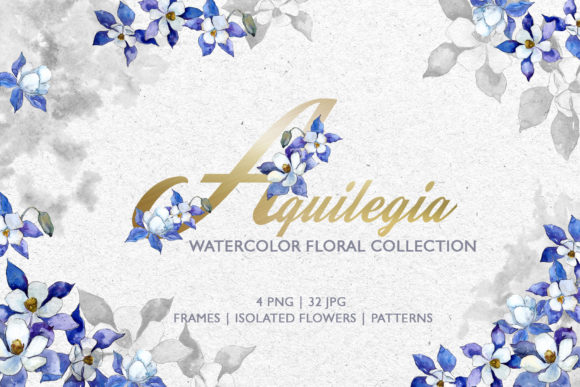
When you work with digital design, print materials, or any creative project, having reliable visual assets at hand can make the difference between a polished outcome and a rushed compromise. Watercolor Blue Aquilegia offers a hand-painted collection of botanical elements that fit naturally into a wide range of real-world applications. Whether you are preparing wedding invitations, building a brand kit, or designing social media templates, this set of 36 files provides usable material without forcing you to start from scratch. The collection includes PNG files at 300 dpi with transparent backgrounds, alongside JPG patterns and frames at 3500x3500 pixels, giving you flexibility across both digital and print workflows.
What the Watercolor Blue Aquilegia Collection Contains
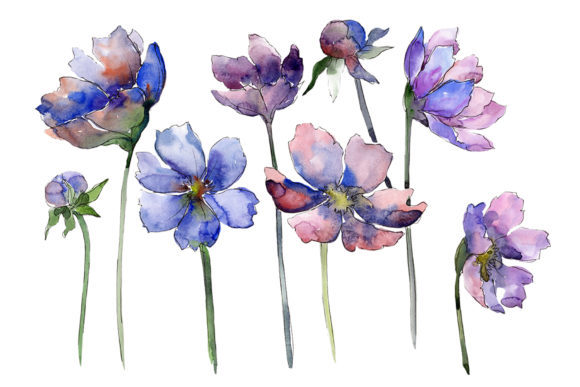
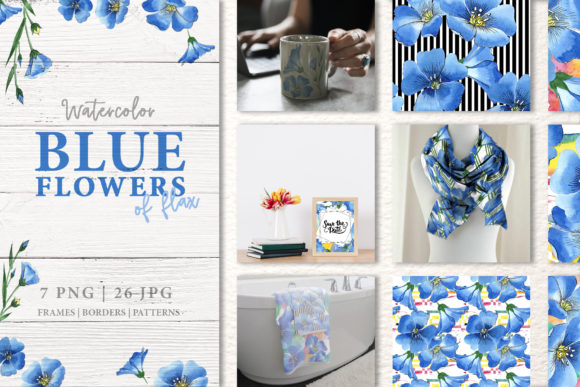
The pack is built around four PNG files and 32 JPG files. The PNGs are isolated illustrations with no background, meaning you can place them directly onto any surface without additional masking. The JPGs cover frames, borders, and repeating patterns. Every illustration is hand-painted and highly detailed, capturing the organic quality of real watercolor. This matters when you need texture that reads as natural rather than mechanically generated. Each graphic is a separate file, so you can import only what you need without sorting through layered composites. The resolution and file size are consistent, which simplifies batch processing and keeps your project timeline predictable.
Where Watercolor Blue Aquilegia Fits in Your Process
Creative workflows generally follow a pattern: planning, asset gathering, composition, refinement, and output. Watercolor Blue Aquilegia is most useful during the asset gathering and composition phases, but it also supports refinement when you need to adjust colors, resize elements, or overlay textures. Because the files are fully editable in terms of size, color, and placement, you are not locked into a preset look. This is especially relevant if you work with clients who request revisions after seeing a first draft. Instead of re-painting or searching for alternative assets, you can adjust what you already have.
If you are a small business owner creating product packaging or a freelancer building a set of greeting cards, having a consistent visual language across your materials saves time. The blue aquilegia motif carries a calm, botanical feel that pairs well with minimalist, rustic, or elegant themes. You can use the isolated PNGs as focal points on a page, or layer them under text for a subtle background effect. The frames and borders work well for structuring content without competing with the message.
Before the Project Starts
During the planning phase, you can review the collection to determine whether the style aligns with your target audience or event theme. Because the illustrations are watercolor, they work best for projects where a handcrafted, approachable look is appropriate. If you are designing for a formal corporate report, this might not be the right fit. But for wedding stationery, baby shower invitations, blog headers, or inspirational quote cards, the aquilegia motif sets a warm, organic tone from the outset. Knowing your asset palette early helps you avoid mid-project style shifts that waste time.
During Asset Assembly and Composition
When you begin composing your layout, the PNG files integrate smoothly into software like Adobe Photoshop, Illustrator, Canva, Affinity Designer, or Procreate. The transparent background means you can drag the file onto your canvas and immediately position it without cutting out a background. This is a practical time-saver when you are working on multiple pages or versions. For example, if you are creating a set of 30 wedding invitation suites, you can place the same aquilegia illustration on the main card, the RSVP card, and the details insert, scaling it differently each time without losing quality.
The JPG patterns and frames are useful for backgrounds and borders. Because they are 3500x3500 pixels, they cover a full print page at 300 dpi. You can use a pattern as a subtle backdrop for text, or place a frame around a photo or quote. If you need a specific color tint, you can overlay a semi-transparent shape or adjust the hue in your editing software. The hand-painted quality of the patterns means they do not repeat in an obvious mechanical way, which keeps the background looking organic even when it covers a large area.
After the Project Is Complete
Once your design is finalized, the high resolution and print-ready formats mean you can send files directly to a printer or upload them to a print-on-demand service. The 300 dpi PNGs hold up well on paper, cardstock, canvas, or fabric. If you are creating digital products like printable planners or PDF invitations, the transparent PNGs keep file sizes manageable while maintaining clarity. Over time, you can reuse elements from this collection across different projects, building a consistent visual brand without repurchasing assets.
Practical Implementation Tips
To get the most out of Watercolor Blue Aquilegia, consider how you organize and prepare your files before you start designing. Here are a few concrete approaches that fit into a normal workflow:
- Name your files by type and color. The collection comes with separate files, but renaming them to match your project structure helps you find the right element quickly. For instance, you could group files into folders labeled "Isolated PNG," "Frames," "Patterns," and "Borders."
- Create a master template. If you are producing a series of items like greeting cards or social media posts, set up a template file with your standard canvas size and import one aquilegia element as a placeholder. Then swap in specific variations as needed. This reduces repetitive setup work.
- Adjust color in post-production. The blue tones are the primary palette, but you can shift hues in your editing software to match a client's brand or a seasonal theme. Because the PNGs have transparent backgrounds, color adjustments apply cleanly without affecting surrounding layers.
- Layer patterns under text. JPG patterns work well as full-bleed backgrounds, but you can also use them as textured panels. Place a pattern on a layer, reduce opacity to 30–50%, and add a solid color overlay to soften the contrast. This gives you a subtle backdrop that does not distract from reading.
Integration with Other Tools and Assets
Watercolor Blue Aquilegia does not operate in isolation. It pairs well with other design resources such as calligraphy fonts, solid color palettes, gold foil textures, or botanical line art. If you have a collection of hand-drawn elements in a similar style, you can mix and match to expand your visual vocabulary. The blue watercolor aesthetic also complements natural materials like kraft paper, linen textures, or wood grain backgrounds.
For digital workflows, the PNG files can be imported into video editing software for lower thirds or title slides. The patterns work as animated backgrounds if you loop them in a video timeline. If you are a content creator producing YouTube thumbnails or Instagram stories, the aquilegia illustrations add a handcrafted feel that stands out against template-heavy feeds. The same files can also be printed onto adhesive paper for physical products like stickers, labels, or gift tags.
Usability and Consistency Across Projects
Consistency is a recurring challenge when you produce multiple pieces that belong to the same series. Because all illustrations in this pack share a common painting style and color family, you can maintain a cohesive look without manually matching each element. This is useful for businesses that release seasonal collections or for bloggers who maintain a consistent visual brand across posts. The 300 dpi resolution also ensures that you can enlarge elements without pixelation, which is important if you switch between web and print formats.
From a quality control standpoint, the hand-painted nature of the assets means you do not need to worry about artificial-looking gradients or flat vector shapes. The watercolor texture carries its own subtle variations, which add depth to your designs. If you work with clients who value authenticity, these organic details often communicate more care than purely digital illustrations.
Long-Term Use and Storage
Digital assets are only valuable if you can find and use them later. Store the Watercolor Blue Aquilegia files in a dedicated folder with a clear naming convention. If you use a digital asset manager like Eagle, Adobe Bridge, or even a well-organized cloud drive, tag the files with keywords like "watercolor," "aquilegia," "blue," "botanical," "frame," and "pattern." This makes retrieval fast when you begin a new project months or years later. Because the files are standard PNG and JPG formats, they remain compatible with future software versions without conversion issues.
Who Benefits Most from This Collection
The practical value of Watercolor Blue Aquilegia is highest for professionals and creators who produce visual content regularly. Wedding planners and invitation designers can use the frames and isolated illustrations to create cohesive stationery suites. Greeting card makers can swap out elements for different occasions while keeping a consistent base style. Bloggers and social media managers can use the patterns as recurring backgrounds for quote graphics or post headers. Small business owners who handle their own marketing can produce professional-looking materials without hiring a designer for every piece.
Educators and content creators who produce printable worksheets or study guides can use the aquilegia illustrations to add visual interest without distracting from the content. The transparent PNGs are especially useful here because they can be placed alongside text without blocking it. For anyone who sells digital products on platforms like Etsy, Creative Market, or Gumroad, this pack provides a ready-made aesthetic that can be applied to multiple product lines.
Final Observations on Practical Use
Watercolor Blue Aquilegia works best when you treat it as a flexible toolkit rather than a fixed set of images. The editable size, color, and placement give you room to adapt the assets to your specific context. Whether you are designing for print or digital, the combination of transparent PNGs and high-resolution JPGs covers the most common use cases without forcing you to convert formats. The hand-painted detail ensures that your finished work carries a tactile quality that purely digital graphics often lack.
If you are building a library of reusable design assets, this collection fits naturally alongside other watercolor sets, textures, and typography resources. The key is to integrate it into your workflow at the point where you are selecting and arranging visual elements, rather than treating it as an afterthought. With a little upfront organization and a clear sense of how you will use the frames, patterns, and isolated illustrations, you can produce consistent, high-quality work across multiple projects without starting from zero each time.