Bouquet Sunny Mood Watercolor: A Practical Resource for Creative Projects
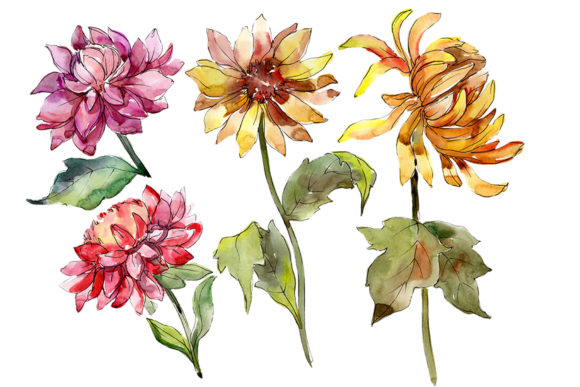
The Bouquet Sunny Mood Watercolor collection offers a thoughtfully assembled set of hand-painted floral elements designed for a wide range of creative work. Whether you are preparing wedding invitations, designing greeting cards, developing blog visuals, or producing printed marketing materials, this pack provides the building blocks for projects that require a warm, organic, and polished aesthetic. Understanding what this collection contains, how it fits into a production workflow, and how to get the most out of each asset will help you integrate it smoothly into your own process.
This article walks through the contents of the pack, explains practical ways to use the elements before, during, and after a project, and offers concrete implementation tips. The goal is not to sell you on the idea of using watercolor graphics, but to show how these specific files—PNG clipart with transparent backgrounds, high-resolution patterns, frames, and borders—can become a reliable part of your toolkit.
Understanding the Bouquet Sunny Mood Watercolor Collection
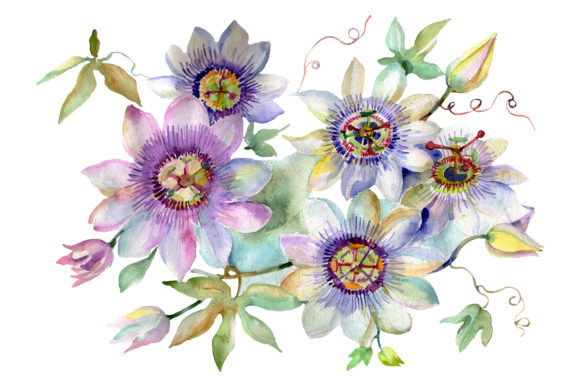
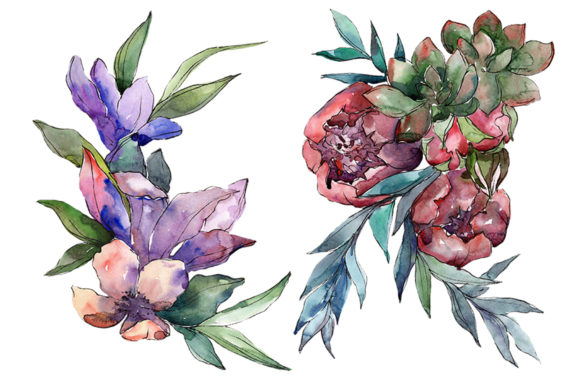
The pack contains three distinct types of files: isolated PNG clipart elements, seamless patterns, and borders or frames. Each file has been painted by hand, scanned at 300 dpi, and prepared for immediate use. The PNG files have no background, which makes layering them over other designs, textures, or photographs straightforward. The patterns and frames are provided as JPG files at 3500x3500 pixels, giving you ample resolution for both digital and print output.
Because every illustration is a separate file, you can pick and choose exactly what you need. You are not forced to use a precomposed arrangement. Instead, you can build your own composition by dragging individual flowers, leaves, or accent elements into your document. This modular approach gives you control over placement, scale, and rotation, and it keeps the design process flexible.
What’s Included in the Pack
- 3 PNG files – isolated floral elements, decorative accents, and small botanical details. Each file is 300 dpi with a transparent background, ready to place over any color or image.
- Patterns and borders – provided as JPG files at 3500x3500 pixels. These can be used as full-page backgrounds, repeating textures, or framing devices.
- High detail – every illustration retains the brush texture, color variation, and organic edges of the original hand-painted artwork. This gives the final output a handmade quality that flat vector graphics often lack.
Why File Format and Resolution Matter
Working with 300 dpi PNG files means you can print these elements at a professional level without worrying about pixelation. The transparent background saves you time during compositing because you do not need to manually remove a white or colored backdrop. For digital use, the resolution also holds up well on high-density screens, retina displays, and large monitors. The JPG patterns and frames, while not transparent, are large enough to be cropped, resized, or used as a base layer. If you need to adjust the color of a pattern, you can overlay a new hue using blending modes or adjustment layers in your editing software.
Integrating Bouquet Sunny Mood Watercolor into Your Workflow
How you use this collection depends on the stage of your project. Some tasks benefit from starting with the assets, while others work better when the watercolor elements are introduced later as finishing touches. The key is to plan before you open your design software.
Preparation and Organization
Before you begin designing, take a few minutes to organize the files on your computer. Create a dedicated folder for the pack, and within it, sort the PNGs and JPGs into subfolders if needed. Name the files in a way that makes sense for your project—for example, grouping flowers, leaves, frames, and patterns separately. If you work with a digital asset manager or a design application that uses libraries, import the files there so you can drag and drop them directly onto your canvas. This upfront organization reduces friction later when you are in the middle of a tight deadline.
Compatibility with Design Software
The PNG and JPG formats work across virtually every design tool: Adobe Photoshop, Illustrator, InDesign, Affinity Photo, Canva, Procreate, GIMP, and web-based platforms like Figma or Sketch. The transparent PNGs are especially useful in layered workflows. You can place a floral accent over a solid background, adjust its opacity, apply a drop shadow, or change its hue with a color overlay. The JPG patterns, since they do not have transparency, are best used as background layers or as a texture applied via blending modes. If you need to remove the white background from a JPG pattern, you can use a color range selection or a multiply blend mode, depending on your software.
Customization and Flexibility
Because the elements are fully editable in terms of size, color, and placement, you can adapt them to almost any visual style. For example, you can resize a flower to become a subtle background accent or a bold focal point. You can change the color of a PNG element by applying a hue/saturation adjustment, a gradient map, or a color overlay layer style. The hand-painted texture remains visible even after color adjustments, so the organic feel is preserved. Patterns can be rotated, cropped, or tiled to fit different aspect ratios. The frames and borders can be stretched or repositioned to accommodate various content areas.
Practical Use Cases Across Projects
The Bouquet Sunny Mood Watercolor collection fits into multiple project types. Below are several scenarios that show how the assets can be used from conception to final output.
Wedding Invitations and Stationery
For wedding invitations, the isolated floral elements can be arranged around the couple’s names, the ceremony details, or a monogram. Use a frame from the JPG files as a border for the invitation card, and add a pattern as a subtle background for the RSVP card or the information insert. Because the elements are high resolution, you can print them at standard invitation sizes (5x7 inches, A5, or A6) without losing detail. The warm, sunny color palette suits spring and summer weddings but can be adjusted to match a specific color scheme using simple hue shifts.
Workflow tip: Start by placing the frame on a blank canvas. Then layer the invitation text in a central column. Finally, add isolated floral elements around the text to balance the composition. Keep the arrangement asymmetrical for a modern look, or mirror the elements for a more traditional feel.
Greeting Cards and Personal Messages
Greeting cards for birthdays, thank you notes, or just-because messages benefit from the hand-painted quality of these assets. Use a border or frame to define the card front, and place a single large flower or a small bouquet as the focal point. Because the PNGs have no background, you can stack multiple elements to create depth. For example, place a leaf behind a flower, then add a smaller accent blossom on top. The watercolor texture adds a tactile, personal feel that printed cards often lack.
Efficiency tip: If you produce cards regularly, build a template with the frame layer locked and the text area marked. Then drop in different floral combinations for each new card. This keeps your output consistent while allowing for variation.
Blog Graphics and Social Media
Blog headers, Pinterest pins, Instagram posts, and featured images can all incorporate these watercolor elements. Because the files are large, you can crop into a pattern to create a textured background for a quote overlay. Alternatively, place a single floral element in the corner of a blog image to soften the edges and add a cohesive visual theme across your content. If you run a lifestyle, wellness, or creative blog, the sunny mood of these assets aligns well with positive, uplifting topics.
Quality control note: When exporting for web, downscale the PNGs to match your platform’s recommended resolution (typically 1080 pixels wide for Instagram, 1200 pixels for Pinterest). The transparency will remain intact, so the element will sit cleanly over any background color your blog theme uses.
Posters and Printed Materials
For posters, flyers, or small format prints, the pattern JPGs can be used as full-bleed backgrounds. Place your headline and body text over the pattern, then add a solid color overlay with reduced opacity if the pattern is too busy. The frames are useful for event posters, where you need a clear boundary around essential information like dates, locations, or ticket details. Because the files are 3500x3500 pixels, they can be printed at sizes up to about 12x12 inches at 300 dpi, or larger with acceptable quality depending on the viewing distance.
DIY Crafts and Home Decor
Beyond digital and print design, these assets can be used for physical crafting. Print the isolated elements on sticker paper or adhesive sheets to create custom decals for journals, planners, gift tags, or scrapbooks. The patterns can be printed on cardstock and used as wrapping paper, bookmarks, or decorative inserts. Because the files are provided at high resolution, you can scale them down for small items without losing sharpness.
Workflow Examples from Start to Finish
To illustrate how the Bouquet Sunny Mood Watercolor collection integrates into a real process, here are two brief walkthroughs.
Example 1: Designing a Wedding Invitation Suite
- Prepare the document. Create a new file in your design software at 5x7 inches, 300 dpi, CMYK color mode.
- Add the background. Place one of the pattern JPGs as the base layer. Reduce its opacity to 15% so it reads as a subtle texture rather than a dominant pattern.
- Place the frame. Insert a border JPG, resize it to fit within the margins, and set its blend mode to Multiply if it has a white background.
- Add text. Type the couple’s names, date, and venue details. Use a clean serif or script font that complements the organic feel of the watercolor.
- Layer floral accents. Drag individual PNG flowers and leaves onto the canvas. Position some near the text to draw the eye, and place others along the border for a cohesive look.
- Export. Save the final file as a PDF for printing, and also export a PNG version for digital previews.
Example 2: Creating a Set of Greeting Cards
- Build a master template. Set up a 5x7 inch document with a border JPG in place. Lock the border layer.
- Design the first card. Add a single large flower PNG off-center, then add a smaller leaf near the bottom. Type a short message in a contrasting color.
- Duplicate for variation. Copy the template file three times. Replace the floral elements in each copy, rotating and resizing them so each card looks distinct but belongs to the same set.
- Preview and adjust. Check that the colors across the set feel consistent. If one flower looks too warm compared to the others, adjust its hue slightly.
- Print or export. Output the cards as individual PDFs or PNGs for home printing or send to a professional printer.
Tips for Long-Term Use and Organization
If you plan to use these assets across multiple projects, a small investment in file management and documentation will save time later.
File Management and Archiving
Keep the original pack files unaltered in a master folder. Create a separate working folder for each project, and copy only the assets you intend to use. This prevents accidental overwrites and makes it easy to locate the original file if you need a fresh version. If you use a cloud storage service, sync the master folder so you can access the assets from different devices.
Maintaining Consistency Across Projects
If you use these watercolor elements across a brand or series, note the specific hue adjustments, scale settings, and placement patterns you applied. You can create a simple style guide document with screenshots and settings. This is especially useful if you work with a team or if you return to a project months later and need to match the original look. Consistency does not mean every project looks the same—rather, it means the hand-painted quality and sunny mood remain coherent even as compositions change.
Final Observations
The Bouquet Sunny Mood Watercolor collection is not a magic solution that designs your project for you. What it offers is a set of high-quality, hand-painted building blocks that integrate cleanly into a standard design workflow. The transparent PNGs, high-resolution patterns, and modular file structure give you control over composition, color, and scale. Whether you are preparing wedding invitations, producing greeting cards, creating blog graphics, or printing posters, these assets hold up under professional scrutiny. The real value lies in how you choose to layer, customize, and combine them—and with a little planning, they can become a reliable component of your creative process.